Homegrown products of South African origin get short shrift
Why all the fuss over food products “made in Italy”, Woolworths? We should be celebrating local food, grown and reared in the South African veld and sunshine
By Prof Johann Kirsten published by News24
Woolworths has collaborated to produce a six-part M-Net documentary series titled Made in Italy to showcase the authentic Italian origins behind its Italian food range. But what about rooibos and Karoo lamb – homegrown food products that have been officially certified as being of South African origin?
The TV show, as well as Woolworths’s accompanying “Italian Edition” food campaign, explore the heritage and craftsmanship behind traditional ingredients like pasta, cheese, olive oil, and cured meats. They promote foods defined by their origin such as Parmesan Cheese (Parmigiano Reggiano), Parma ham (Prosciutto di Parma), and Tuscan Extra Virgin Olive Oil (Olio Toscana).
All are protected by European PGI (Protected Geographical Indication) status and cannot be sold without the requisite stamps and labelling, which Woolworths is doing happily.
This is all well and good (who doesn’t love pasta?) but why doesn’t the retailer put the same energy into promoting the authenticity of food products that have been part of South Africa’s heritage for centuries?
The official regulation to protect South African geographical indications (GIs) was published in the Government Gazette in February 2023. This came after 17 years of scientific study, relentless groundwork by farmers, and research collaboration with the EU and various institutions familiar with the concept of origin-based foods.
The first officially protected South African GIs are rooibos and Karoo lamb. This means that government regulation now protects and confirms the authenticity and the undisputed links of these products to their place of origin in much the same way as certified Parma ham may only be produced within the Province of Parma in Emilia-Romagna, Italy and authentic Champagne must come exclusively from the Champagne region in northeastern France.
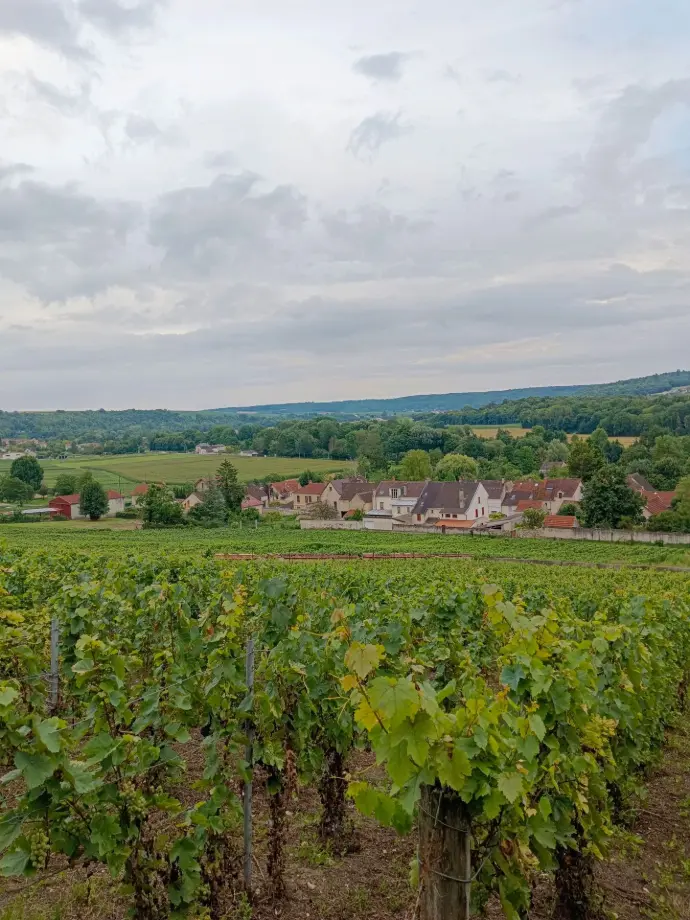 Champagne region, France
In the case of Karoo lamb, the regulations stipulate that the name may apply to all meat cuts from lamb born and nurtured, under free-range conditions on indigenous veld in the Nama Karoo Biome, which stretches over parts of the Northern, Western and Eastern Cape.
Covering an area of about 30 million hectares, it encompasses approximately 100 Karoo towns, townships, and villages – including Price Albert and Beaufort West - a few thousand farms, about 7 million sheep and roughly 1 million people.
Central to the GI is the acknowledgment that Karoo lamb produced in this area has specific aromatic, herbal and sensory attributes linked to the indigenous plants the sheep graze on, or, as the farmers like to say, “Karoo Lamb tastes of veld, shrubs, fresh air and sunshine”.
Two studies by Stellenbosch University have also found that Karoo lamb is healthier, more flavourful and has better colour stability on the shelf.
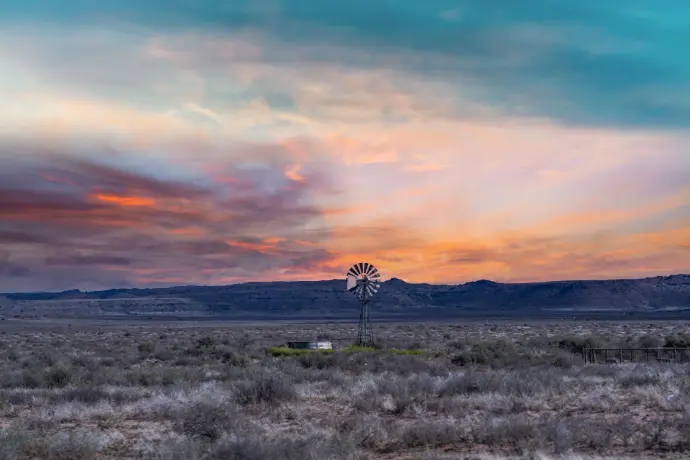 Karoo landscape
The GI designation is clearly a major benefit to South African farmers but also provides assurance to South African consumers that the product they are buying is the real deal. But getting commercial recognition and buy-in for certified Karoo lamb from retailers has not been plain sailing.
Despite pictures of the Karoo veld in many Woolworths stores, and the fact that a large share of Woolworths’s so-called “Free Range Lamb” is sourced from Karoo farms that comply with the origin credentials of the Karoo lamb GI, there is no indication on its packs of lamb that the specific chop you’re buying comes from the Karoo.
Woolworths has an impeccable traceability system for all food products, so it should be easy to label those packets assembled from Karoo lamb carcasses as such. It is almost as if it is too shy to tell South Africans that it stocks Karoo lamb. Instead, it looks North and brags about Italian Parma ham and Parmesan cheese, which it has no problem labelling correctly.
Why the double standards?
We have tried for years to convince Woolworths to sell the meat they source from the Karoo as Karoo lamb, but they have repeatedly refused. It is probably because keeping the origin invisible keeps Karoo farmers as anonymous, interchangeable suppliers rather than allowing them to develop into brand partners with the pricing power to push back on retail margins.
And, of course, unlike Italian producer consortia, which have the organisational and funding
capacity to make authentic Italian products a retail marketing partnership worth Woolworths's while, Karoo farmers’ organisations lack the co-marketing budget or bargaining weight. So, perhaps Woolworths isn't ignoring Karoo lamb's authenticity out of oversight; there is simply no organised economic force on the producer side making it costly for the retail giant to simply erase the product.
Either way, here is the challenge to Woolworths: please label those packs of “Woolworths Free Range Lamb”, which were produced with care and dedication by Karoo famers on Karoo veld, as “Karoo Lamb”. All that is needed is to add the following label to those meat packs that can be traced to the Karoo:
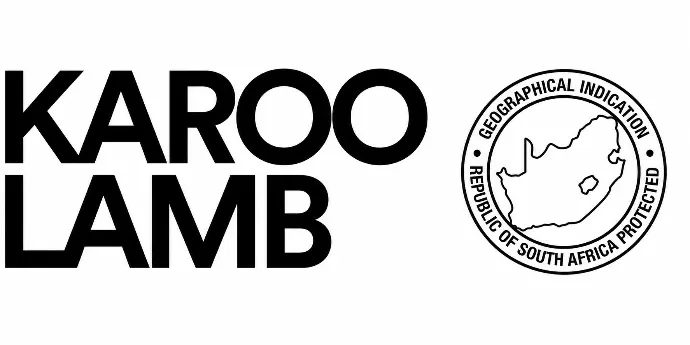 Karoo Lamb and South African GI logo
In this way Woolworths would not only support Karoo farmers and rural, farming communities but also ensure that South Africa’s food heritage is as visible and available to local shoppers as their imported delicacies.
And who wouldn’t want that?
• Prof Kirsten is a Professor in Agricultural Economics, Karoo farmer and member of the Karoo Lamb Consortium
This article was originally published on News24. [Read the original article here.]